Sequencing an ETICS façade in one season
Render systems are weather-dependent at four separate stages. Getting the order right is what keeps a façade off the following spring.

An external insulated render is four wet trades stacked on each other, each with its own temperature and humidity window. Miss one window and the whole façade waits for spring.
The four stages
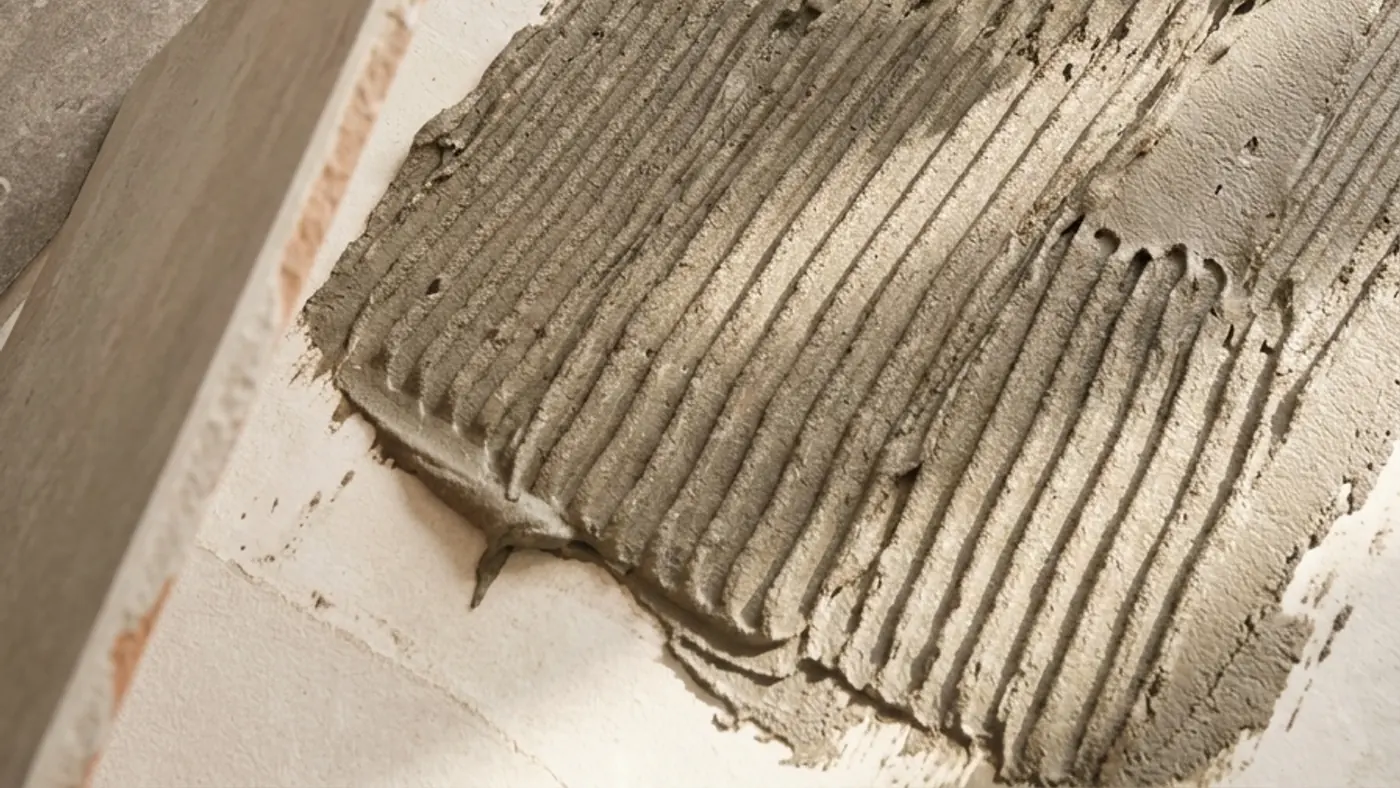
- Bedding the boards — adhesive needs above 5 °C and a substrate that is not saturated.
- Mechanical fixing — weather-independent, and the only stage that is.
- Mesh reinforcement coat — above 5 °C, and it must not freeze for several days after.
- Thin-coat render and finish — the tightest window of all, typically 5–25 °C, out of direct sun, and dry for at least 48 hours.
The mistake that costs the season
Boards go up in October because the scaffold is there, the mesh coat follows, and then the render waits for a dry week that does not come. The mesh coat is not a weathering layer. Left exposed over a Polish winter it takes freeze-thaw damage, and in spring it has to be made good before the render can go on.
If the render cannot be finished in the same stretch of settled weather, it is usually cheaper to hold the boards in our racking and start the whole wall in March than to get two stages up and stop.
Sun is as much a problem as cold
Thin-coat silicone render skins over fast in direct sun, which leaves trowel laps you cannot work out. A south elevation in July needs shading nets, early starts, or both.
The same applies to graphite EPS at board stage: dark boards in direct sun bow, and a bowed board telegraphs straight through the finish. Swisspor's Lambda White carries the graphite performance behind a white skin for exactly this reason, and on a summer programme it saves the cost of netting the scaffold.
A workable sequence
- Boards and fixings delivered to the scaffold lift being worked, not the whole elevation at once
- Mesh coat following within days, never left as the finish over winter
- Render and topcoat in one settled stretch, elevation by elevation, following the sun round
- Silicone topcoat last, on a fully cured render — not on one that was rained on at 24 hours
We sequence ETICS deliveries by scaffold lift rather than by elevation as standard. Tell us the programme and the lift heights and it arrives in that order.