C2TE S1, decoded
Five characters on a bag of tile adhesive, each of them a separate test. Knowing which ones your job actually needs is most of the specification.
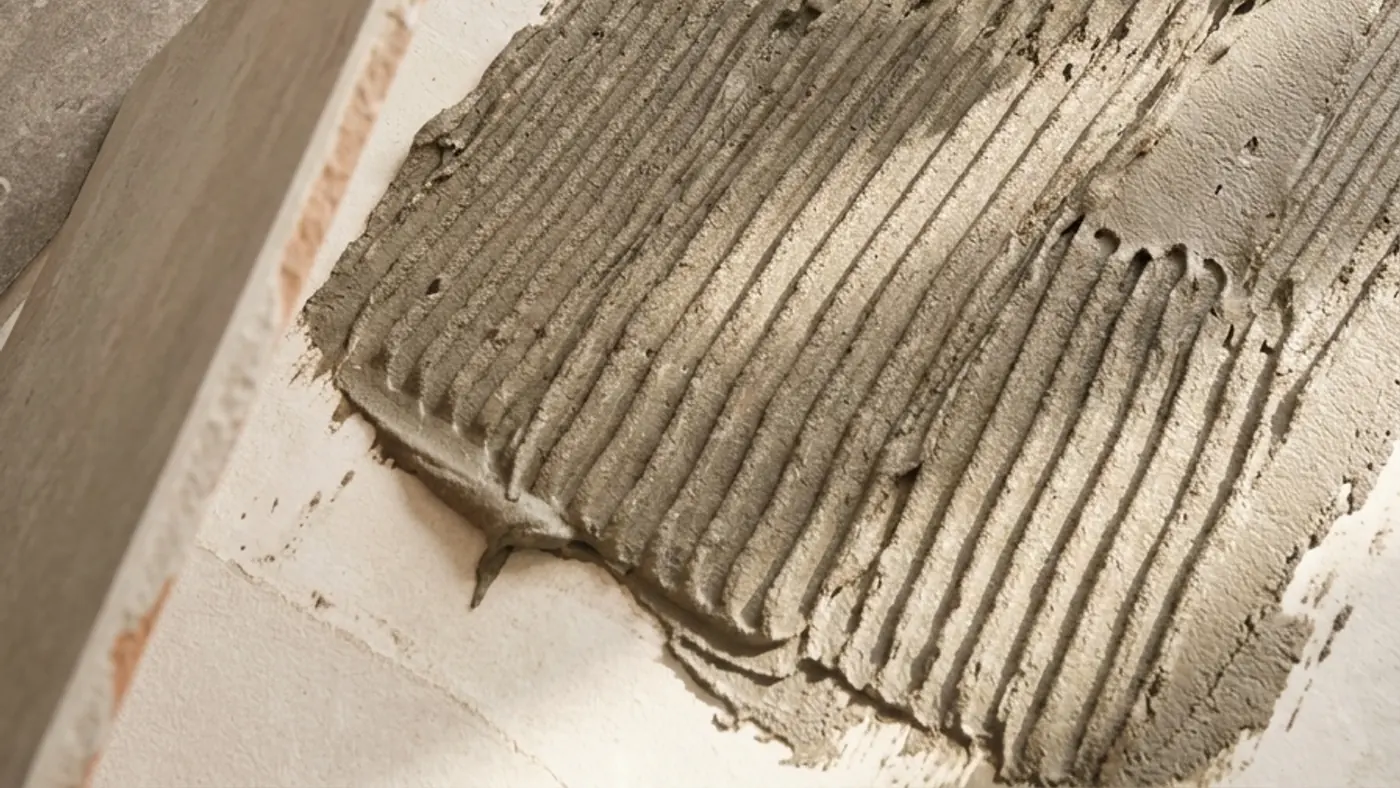
Tile adhesive is classified under EN 12004, and the code on the bag is not marketing. Each character is a test the product either passed or was not submitted for.
The number: how hard it holds
- C1 — cementitious, tensile adhesion at least 0.5 MPa.
- C2 — improved, at least 1.0 MPa. Twice the bond.
C1 is adequate for small ceramic tiles on a stable, absorbent internal wall. Everything that is heavy, large, external, or going onto something that moves wants C2.
The letters: how it behaves while you work
- T — slip resistance. The tile stays where you put it on a wall instead of creeping down the bed.
- E — extended open time. At least 30 minutes before the surface skins, against 20 for a standard mix. On a large format, that is the difference between full coverage and a hollow corner.
- F — fast setting. Foot traffic in hours, not a day. For retail refits and anything working overnight.
T and E are what make a bag comfortable to work with. F is what you buy when the programme, not the tile, is the constraint.
S1 and S2: how much movement it forgives
This is the one that decides whether tiles crack six months after handover. Deformability is measured as transverse deformation:
- No S — rigid. Fine on a stable, mature substrate with nothing moving underneath.
- S1 — deformable, 2.5 to 5 mm. The class for underfloor heating, for large formats, for terraces.
- S2 — highly deformable, over 5 mm. Timber substrates, thin beds over movement, tile on tile.
A screed with heating in it expands and contracts through every cycle. A rigid bed transfers that strain straight into the tile, and it exits at the weakest point — usually a corner. S1 absorbs it. This is why Atlas Plus and Ceresit CM 17 are both C2TE S1 and why we will argue about substituting them down.
Reading it back
So C2TE S1 is: improved bond, slip resistant, thirty-minute open time, deformable. That combination covers almost every floor and wall a Polish fit-out will throw at it, which is why it is the most ordered specification in this warehouse.
C2FT without the S, by contrast, is fast and slip-resistant but rigid — excellent for a quick retail floor on a mature slab, wrong over heating.
Consumption, which decides how many bags
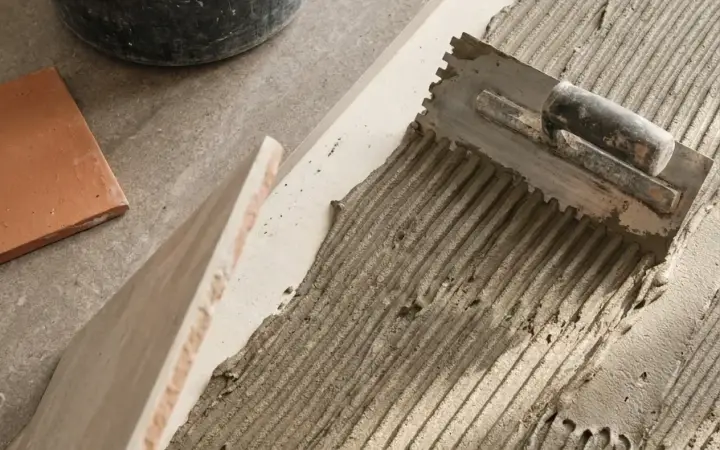
Coverage follows the trowel, not the tile. A 6 mm notch puts down roughly 2.5 kg/m², an 8 mm about 3.5, a 10 mm about 4.5. Back-buttering a large format adds 30 to 50 percent on top of that, and nobody remembers it when ordering.
The calculator on each product page rounds to whole bags and whole pallets for exactly this reason — the shortfall is almost always the back-buttering.